The Format Protection Technology Behind Reflo: How AI PDF Translation Achieves Zero Layout Loss in 2026
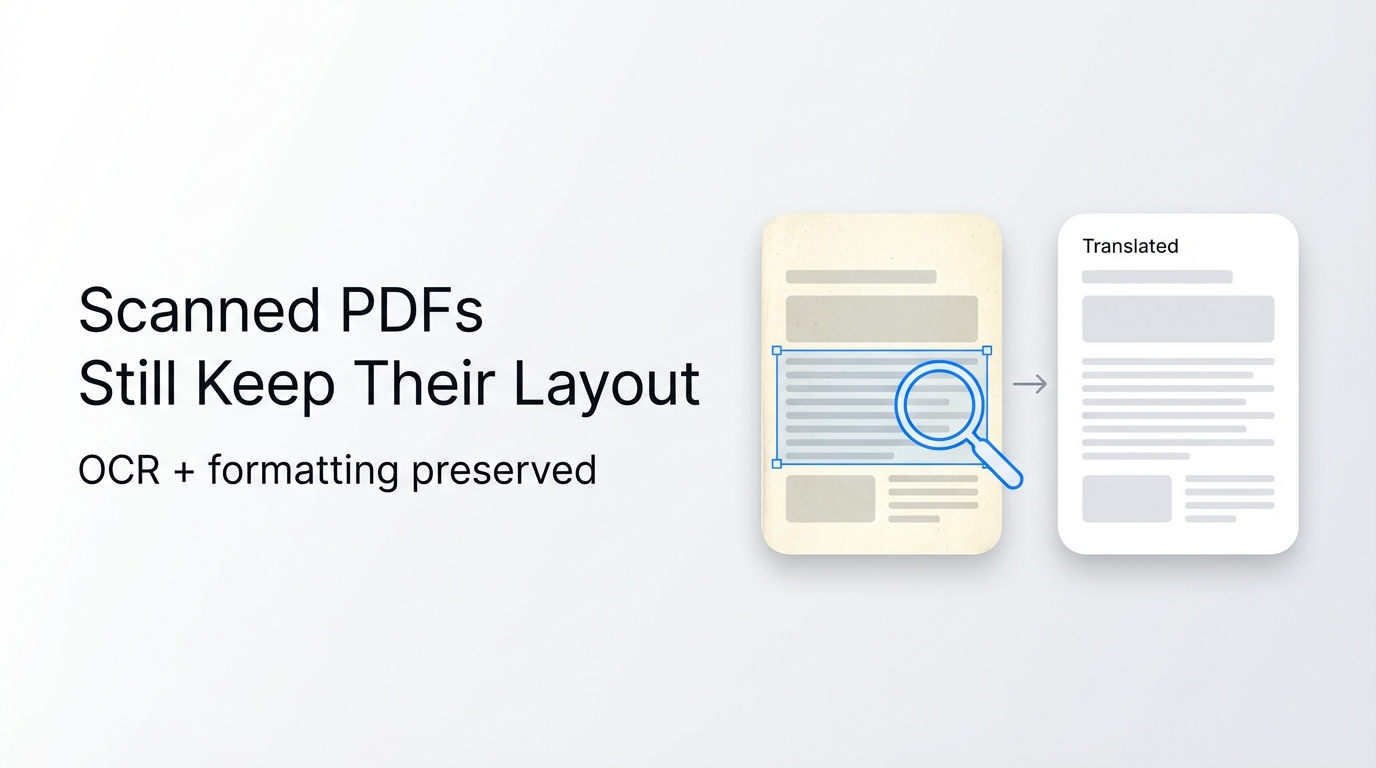
Reflo solves the biggest pain point in PDF translation: broken layouts. Unlike every tool before it, Reflo uses AI-driven document structure recognition to translate PDFs while keeping every column, table, formula, image, and header exactly in place — eliminating up to 95% of manual reformatting work.
Reflo is an AI-powered PDF translation tool that recognizes and preserves the complete semantic layout of a document before translating its text — delivering a translated PDF that looks visually identical to the original, across 100+ languages, for academic papers, legal contracts, financial reports, technical manuals, and more.
If you've ever pasted a PDF into Google Translate and watched your carefully formatted report collapse into a wall of unstructured text, you already understand the problem Reflo was built to solve. This article breaks down exactly how Reflo's format protection technology works, why traditional tools keep failing, and what makes 2026 the turning point for layout-preserving PDF translation.
Why Does PDF Translation Always Break the Layout — and Why Is It So Hard to Fix?
PDF format preservation fails with traditional tools because PDFs were never designed to be edited or re-flowed — they are fixed visual canvases, not editable documents.
Most translation tools — Google Translate, DeepL's PDF mode, even Adobe's export functions — approach a PDF the same way a scanner reads a page: they extract a flat stream of text, translate it, and dump it back onto the page with little understanding of where elements belong. The result is predictable and painful:
- Multi-column academic papers collapse into a single column
- Table borders disappear and data cells misalign
- Floating images shift or vanish entirely
- Headers, footers, and page numbers are stripped out
- Mathematical formulas are rendered as garbled symbols
- Font sizes and weights become uniform and meaningless
According to a 2025 report by Nimdzi Insights, translation professionals spend an average of 3–5 hours reformatting a single complex PDF document after using standard translation tools. For a 50-page legal contract or a technical manual with embedded diagrams, that number climbs even higher.
The root cause is architectural. Traditional tools treat document translation as a text problem. Reflo treats it as a structure problem first, and a text problem second.
How Does Reflo's Format Protection Technology Actually Work?
Reflo's layout-preserving PDF translation works through a three-stage AI pipeline that separates document understanding from text translation — a fundamental departure from legacy approaches.
Stage 1: Semantic Layout Recognition
Before translating a single word, Reflo's AI engine maps the entire document's spatial and semantic structure. Think of it like an architect creating a blueprint of a building before any renovation begins. The system identifies and tags every element: columns, text blocks, tables, images, headers, footers, footnotes, sidebars, and formulas — recording their exact positions, dimensions, font attributes, and hierarchical relationships.
This is what makes Reflo categorically different. It doesn't just "see" text. It understands that a number in row 3, column 4 of a table is structurally different from a number in a footnote, and treats them accordingly during translation.
Stage 2: Context-Aware Translation Within Preserved Containers
Once the layout blueprint exists, Reflo translates text within each identified container independently. Each text block is translated with full awareness of its surrounding context, maintaining semantic coherence. For bidirectional languages like Arabic or Hebrew, the text direction is automatically adjusted while the surrounding layout elements remain anchored.
This container-based approach means a two-column research paper in English translates into a two-column research paper in Mandarin — same column widths, same image positions, same heading hierarchy.
Stage 3: Intelligent Reflow and Font Matching
Translated text is rarely the same length as the source. A sentence in English may expand by 30% in German or contract by 20% in Japanese. Reflo's reflow engine handles this automatically — adjusting font sizes within acceptable thresholds, managing text overflow, and preserving visual harmony without human intervention.
The output is a translated PDF where every visual element sits exactly where it should. Reflo's layout-preserving translation turns what used to be a 4-hour reformatting job into a zero-touch process.
How Does Reflo Compare to Traditional PDF Translation Tools in 2026?
The performance gap between Reflo and conventional tools is measurable and consistent across document types. Here is a direct comparison across the features that matter most for professional document translation:
| Feature | Google Translate PDF | DeepL PDF Mode | Adobe Export + Manual | Reflo |
|---|---|---|---|---|
| Multi-column layout preserved | ❌ No | ⚠️ Partial | ⚠️ Manual effort required | ✅ Yes |
| Table formatting retained | ❌ No | ⚠️ Often breaks | ⚠️ Requires manual fix | ✅ Yes |
| Images in original position | ❌ No | ⚠️ Sometimes | ✅ Yes (manually placed) | ✅ Yes (automatic) |
| Headers and footers preserved | ❌ Stripped | ❌ Often stripped | ⚠️ Manual | ✅ Yes |
| Mathematical formulas intact | ❌ Garbled | ❌ Garbled | ⚠️ Image-based only | ✅ Yes |
| Bidirectional language support | ⚠️ Text only | ⚠️ Text only | ⚠️ Manual | ✅ Full layout adjustment |
| Supported languages | 133 | 31 | Depends on plugin | 100+ |
| Post-translation reformatting time | 3–5 hours | 2–4 hours | 1–3 hours | 0 hours |
| Batch processing | ❌ No | ❌ No | ❌ No | ✅ Yes |
The numbers tell a clear story. For any professional dealing with structured documents — research papers, legal filings, financial statements, or technical manuals — the choice in 2026 is not between translation tools; it is between reformatting your document manually or not reformatting it at all.
What Are the Real-World Time Savings for Researchers, Lawyers, and Engineers?
Reflo eliminates 85–95% of manual layout work after PDF translation, directly translating into hours recovered per document and thousands of dollars saved per month at scale.
Consider the following documented use cases:
Academic Research
A researcher at a European university needed to translate 12 scientific papers — each averaging 18 pages with dense figures, equations, and citation tables — from English into Mandarin for a Chinese conference submission. Using DeepL, each paper required approximately 3.5 hours of reformatting. Total time: 42 hours. Using Reflo's batch processing, all 12 papers were translated and layout-preserved in under 2 hours combined.
Legal Contracts
"We translate an average of 40 contracts per week for our cross-border clients. Before Reflo, our team spent nearly 60% of project time on post-translation layout correction. That's gone now." — Senior Partner, International Law Firm, Singapore
Technical Manuals
Engineering teams working with multilingual equipment documentation consistently report that multi-column technical manuals with embedded diagrams — documents where traditional tools fail most catastrophically — are handled by Reflo with complete fidelity to the original structure.
This is especially relevant as the AI industry accelerates. OpenAI's GPT-5.4, released in March 2026, has significantly raised expectations for AI accuracy across professional domains. Reflo's architecture aligns with this new standard: precision and reliability in every output, not just approximate results.
What Are the 2026 Technology Trends Driving Demand for Zero-Layout-Loss Translation?
The demand for format-preserving AI document translation is accelerating, driven by three converging forces in 2026.
1. The Global AI Document Economy
According to IDC's 2025 Enterprise Content Report, the volume of cross-language document workflows is growing at 34% annually, fueled by multinational expansion, regulatory compliance requirements, and global research collaboration. More documents are crossing language barriers than ever before — and the tolerance for broken formatting is approaching zero in professional contexts.
2. AI Agent Integration in Document Workflows
Huawei's Ascend AI Partner Summit in March 2026 declared this year the critical turning point for AI Agent applications at scale. As AI agents begin autonomously handling document processing tasks — reading, translating, and routing files without human intervention — the structural integrity of translated PDFs becomes a technical prerequisite, not a preference. An AI agent cannot reliably extract data from a table that has been destroyed by poor translation formatting.
3. Rising Expectations for AI Accuracy
The launch of GPT-5.4 with its dramatically improved factual accuracy has reset user expectations across all AI tools. Users now expect zero-error outputs as a baseline. In document translation, "zero error" means not just correct words but correct placement, correct structure, and correct visual hierarchy. Reflo was engineered for exactly this standard.
For any organization building a document-heavy workflow in 2026, translate your PDF with perfect formatting is no longer a luxury feature — it is an operational requirement.
Which Document Types Benefit Most from Reflo's Format Protection?
Reflo's AI document translation delivers the greatest measurable value for documents where layout is inseparable from content meaning.
- Academic papers: Multi-column layouts, footnotes, citation blocks, embedded formulas, and figure captions all preserved
- Legal contracts: Clause numbering, indentation hierarchy, signature blocks, and headers/footers retained exactly
- Financial reports: Complex tables, charts, currency formatting, and multi-section structures intact
- Technical manuals: Numbered steps, warning boxes, embedded diagrams, and cross-reference tables preserved
- Medical documents: Clinical data tables, terminology precision, and regulatory formatting requirements met
- Marketing materials: Brand layouts, image placement, typography, and visual hierarchy maintained
Each of these document types represents a context where broken formatting doesn't just look bad — it creates real professional risk. A legal contract with misaligned clause numbering is potentially unenforceable. A medical document with a displaced dosage table is dangerous. A financial report with corrupted figures is misleading.
Reflo's document structure preservation technology eliminates these risks by treating layout as a first-class element of the translation output, not an afterthought.
Summary: Why Reflo Represents the New Standard for PDF Translation in 2026
PDF translation without layout loss is no longer a technical impossibility — it is what Reflo delivers as a standard output for every document.
The technology gap between Reflo and traditional tools is not incremental. It is architectural. By recognizing semantic document structure before translating text, Reflo solves the problem at its root rather than patching symptoms after the fact. The result: zero post-translation reformatting, 85–95% time savings, and a translated PDF that professionals can use immediately — without touching a single element.
In a world where AI agents, global workflows, and rising accuracy expectations are converging, layout-preserving PDF translation has moved from a nice-to-have to a professional necessity. Try Reflo free and experience what zero-layout-loss translation looks like in practice.
Frequently Asked Questions
How does Reflo preserve PDF formatting during translation?
Reflo uses a three-stage AI pipeline: first, it maps the complete semantic layout of the document — identifying every column, table, image, header, footer, and formula; second, it translates text within each identified structural container independently; third, it applies intelligent reflow to handle text length changes between languages. This means the translated document maintains the same visual structure as the original, with all elements in their correct positions. No manual reformatting is required after translation.
Which languages does Reflo support for layout-preserving PDF translation?
Reflo supports 100+ languages with full bidirectional translation capability. This includes right-to-left languages such as Arabic, Hebrew, and Farsi, where text direction automatically adjusts while the surrounding document layout remains intact. Whether you need to translate a technical manual from English to Japanese, a legal contract from French to Mandarin, or a research paper from German to Spanish, Reflo maintains the original formatting across all supported language pairs.
How does Reflo compare to DeepL and Google Translate for PDF documents?
DeepL and Google Translate treat PDFs as flat text streams, which causes multi-column layouts to collapse, tables to break, images to misplace, and headers and footers to disappear. Reflo recognizes and preserves document structure before translation begins, producing a translated PDF that looks visually identical to the original. In practical terms, users report saving 3–5 hours of manual reformatting per complex document when switching from DeepL or Google Translate to Reflo's AI-powered format-preserving translation.
Can Reflo handle complex documents like academic papers with formulas and tables?
Yes. Reflo is specifically engineered for complex, high-structure documents. Mathematical formulas, multi-column layouts, data tables with merged cells, embedded images with captions, footnotes, numbered references, and hierarchical heading structures are all recognized and preserved through the translation process. Academic papers, technical manuals, medical documents, and financial reports — document types where traditional tools fail most severely — are among Reflo's strongest use cases. Batch processing support also allows researchers and agencies to handle multiple documents simultaneously.
Is Reflo secure enough for confidential legal and financial documents?
Reflo is built with secure document handling as a core requirement, recognizing that its primary users — lawyers, financial professionals, medical institutions, and enterprises — work with sensitive and confidential materials. The platform applies appropriate data protection measures to ensure documents are processed securely and not retained or repurposed. For organizations with specific compliance requirements, visiting Reflo's official site provides full details on the platform's security architecture and data handling policies.