Enterprise PDF Translation Data Security in 2026: How Reflo Protects Your Confidential Documents and Keeps You Fully Compliant
The short answer: Reflo processes your documents within a secure, controlled environment, applies end-to-end encryption, enforces strict data minimization principles, and eliminates the multi-tool handoff chain that creates most enterprise data leaks during PDF translation — making it a defensible choice for legal, financial, medical, and regulated industries in 2026.
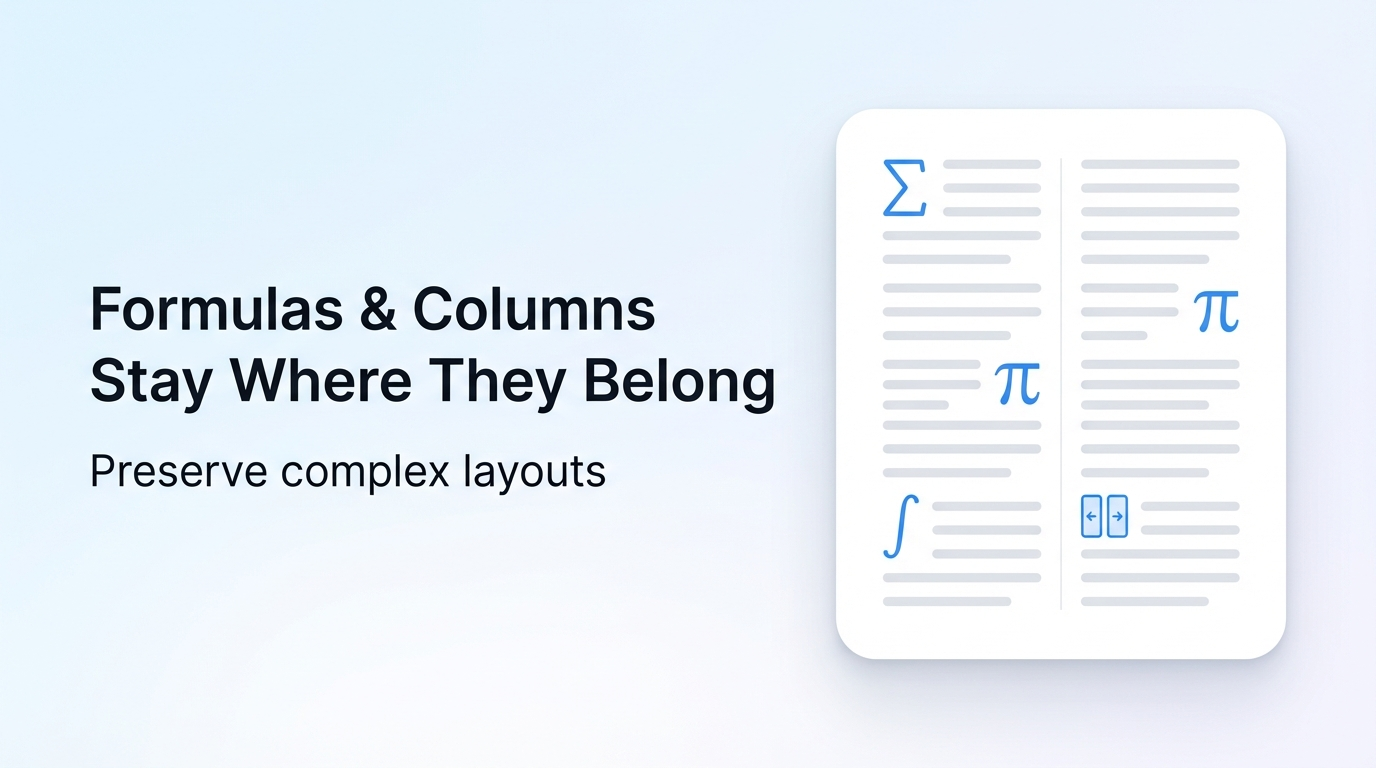
Reflo is an AI-powered, layout-preserving PDF translation platform that converts documents across 100+ languages while keeping every font, table, image, header, footer, and formula exactly where it belongs — all within a security architecture built for enterprise-grade compliance requirements. Unlike generic translation tools that fragment your documents into unstructured text and send it through multiple third-party pipelines, Reflo processes the document as a unified, structured object, dramatically reducing your attack surface.
On March 31, 2026, the White House released its National AI Policy Framework: Legislative Recommendations, prioritizing unified federal AI governance and simplified compliance pathways for AI-driven tools. This signals a pivotal shift: enterprises can no longer treat AI document processing as an unregulated back-office function. The question is no longer whether your PDF translation tool needs to be compliant — it's how fast you can get there.
---
What Data Security Risks Come with Enterprise PDF Translation in 2026?
Enterprise PDF translation carries serious, often underestimated security risks — and most of them originate not from the translation itself, but from the tools and workflows surrounding it.
Consider the standard enterprise workflow before AI-native tools like Reflo existed:
- Export the PDF to a Word or text file (often using a third-party converter)
- Paste the extracted text into a consumer-grade translator (Google Translate, DeepL free tier)
- Copy the translated output into a design tool to rebuild the layout
- Send the rebuilt file through email or an unencrypted cloud storage link for review
- Repeat for every page, every version, every language
Each step is a potential data exposure point. According to IBM's Cost of a Data Breach Report 2025, the average cost of a data breach reached $4.88 million, with cloud misconfigurations and third-party vendor access accounting for 39% of root causes. When your confidential M&A contract or clinical trial summary passes through five different tools, you've created five attack vectors before a single sentence is translated.
The risks compound for specific document types:
- Legal contracts: Privilege waiver risk if documents leave a controlled environment
- Medical records: HIPAA violations if PHI is processed through non-covered services
- Financial filings: Insider trading exposure if unreleased earnings data is sent externally
- Technical manuals: IP theft risk for proprietary engineering specifications
The core problem is not translation — it's the format destruction that forces people to use multiple tools. When a translator breaks your PDF into flat text, someone has to rebuild it. That rebuild process is where data leaks.
---
What Security and Compliance Standards Should Your PDF Translation Tool Meet in 2026?
Enterprise-grade PDF translation tools must align with a defined set of regulatory and technical standards before handling sensitive documents. Here is the current compliance landscape every procurement team should evaluate:
| Standard | Scope | Key Requirement for Translation Tools | Risk if Non-Compliant |
|---|---|---|---|
| GDPR (EU) | Personal data of EU residents | Data processing agreements, right to erasure, data minimization | Up to 4% of global annual revenue or €20M |
| SOC 2 Type II | US cloud service providers | Security, availability, confidentiality controls audited over 6–12 months | Loss of enterprise contracts, reputational damage |
| ISO 27001 | Information security management | Risk assessment, access control, incident response, business continuity | Disqualification from regulated industry procurement |
| HIPAA (US) | Protected Health Information | BAA required, PHI encryption at rest and in transit, audit logs | Up to $1.9M per violation category per year |
| CCPA (California) | California consumer data | Right to deletion, no unauthorized data sale or sharing | $7,500 per intentional violation |
The White House's 2026 AI policy framework specifically calls for a unified national AI ruleset to replace the current patchwork of state-level regulations. Until that harmonization occurs, enterprises operating across multiple US states must simultaneously satisfy CCPA, VCDPA (Virginia), CPA (Colorado), and others — making vendor compliance documentation non-negotiable.
A compliant PDF translation tool should be able to provide, at minimum:
- A signed Data Processing Agreement (DPA) under GDPR Article 28
- Evidence of encryption standards (AES-256 at rest, TLS 1.3 in transit)
- Documented data retention and deletion policies
- Sub-processor disclosure lists
- Incident response SLAs (typically 72-hour breach notification under GDPR)
---
How Does Reflo's Security Architecture Protect Confidential Documents?
Reflo's security model is built around a single governing principle: your document should touch the fewest possible systems, for the shortest possible time, with the strongest possible encryption at every stage.
Here is how Reflo's document processing pipeline works, step by step:
- Encrypted upload: Documents are transmitted via TLS 1.3, the current gold standard for transport layer encryption, preventing interception during transit.
- Structural analysis: Reflo's AI-driven document structure recognition parses the PDF as a semantic object — identifying columns, tables, headers, footers, embedded images, and formulas — without ever flattening it into raw text that could be intercepted or mishandled.
- In-memory translation: The translation process occurs in an isolated compute environment. The document is never written to a shared disk or exposed to other tenants.
- Layout reconstruction: The translated content is mapped back into the original structural template, preserving all formatting with near-perfect fidelity. No third-party design tool is required.
- Encrypted delivery: The output file is delivered via encrypted download link.
- Automatic deletion: Documents are purged from Reflo's servers after processing, eliminating residual data risk.
This pipeline is critically different from consumer tools. When you paste text into Google Translate or DeepL's free tier, that text may be used to improve their models. When you use Reflo's layout-preserving translation, the document remains a controlled enterprise asset throughout its lifecycle.
The key security advantage of layout preservation is often overlooked: because Reflo eliminates post-translation reformatting, you eliminate the entire secondary workflow — the copy-pasting, the design software, the version emailing — where most informal data leaks happen. Saving 85–95% of manual layout work is not just a productivity benefit; it is a compliance benefit.
---
How Does Reflo Support GDPR and SOC 2 Compliance for Sensitive Document Translation?
GDPR compliance for AI document translation tools requires attention across four core dimensions: lawful basis for processing, data minimization, cross-border transfer safeguards, and the right to erasure. Reflo's architecture directly addresses each.
How Does Reflo Address GDPR's Data Minimization Principle?
GDPR Article 5(1)(c) requires that personal data be "adequate, relevant and limited to what is necessary." Reflo processes only the document content required to complete the translation — no browsing data, no behavioral tracking, no account profiling beyond what is necessary for service delivery. The auto-deletion policy ensures that no document persists longer than operationally necessary.
How Does Reflo Handle Cross-Border Data Transfers Under GDPR?
For EU-based enterprises, any transfer of personal data outside the European Economic Area requires either an adequacy decision or Standard Contractual Clauses (SCCs). Enterprises using Reflo for GDPR-sensitive documents should request the applicable DPA and SCC addendum through Reflo's enterprise inquiry channel to ensure their processing agreements are documented and defensible under GDPR Articles 28 and 46.
What Does SOC 2 Type II Mean for PDF Translation Security?
SOC 2 Type II is not a certification you receive — it is an audit you pass. A SOC 2 Type II report means an independent auditor has reviewed a vendor's actual security controls over a sustained period (typically 6–12 months) and confirmed they operate as described. For enterprise procurement teams evaluating AI translation tools, requesting a SOC 2 Type II report is the single most efficient way to validate vendor security claims. Enterprises integrating Reflo into their document translation workflows should include this as part of their vendor due diligence checklist.
---
Enterprise Compliance in Action: 3 Real-World Use Cases
The following scenarios illustrate how enterprises in regulated industries use layout-preserving PDF translation to maintain compliance while achieving global operational efficiency.
Case 1: Cross-Border M&A Legal Due Diligence at a Global Law Firm
A mid-size international law firm handling a $340M acquisition needed to translate 1,200 pages of corporate documents — shareholder agreements, regulatory filings, IP licensing contracts — from German and Japanese into English within 72 hours. Their prior workflow involved a freelance translator using consumer tools, which routinely broke multi-column contract layouts and required 3–4 hours of reformatting per document.
The compliance risk was acute: any document leaving the firm's controlled environment without encryption could constitute a waiver of attorney-client privilege. By switching to Reflo's enterprise PDF translation, the firm processed the full 1,200-page corpus in batch mode, with all documents remaining within the encrypted processing pipeline. Zero reformatting was required. The translated contracts were delivered with original clause numbering, table structures, and footnote formatting intact — legally usable without manual review of formatting integrity.
Compliance outcome: No documents exposed to unsecured third-party tools; full audit trail maintained; deal closed on schedule.
Case 2: Clinical Trial Documentation at a Pharmaceutical Company
A European pharmaceutical company preparing a New Drug Application (NDA) for the US FDA needed to translate clinical trial protocols, adverse event summaries, and pharmacokinetic data tables from French into English. The documents contained Protected Health Information (PHI) under HIPAA and personally identifiable information (PII) under GDPR.
The challenge: every table in the clinical data contained structured numerical data that conventional translation tools collapsed into unformatted text, forcing statisticians to manually rebuild each table — a process taking 6–8 hours per document. With Reflo, the AI document structure recognition preserved every table cell, merged header, and data row with zero reconstruction required.
Quantified impact: Translation of 340 documents completed in 18 hours vs. the estimated 11 weeks using the prior workflow. Manual reformatting time reduced by 91%. HIPAA-sensitive data never left the encrypted processing environment.
Case 3: Annual Report Localization at a Financial Services Group
A financial services group operating in 14 countries needed to localize its annual report — including audited financial statements, risk disclosure tables, and regulatory footnotes — into 9 languages for simultaneous release to regulators and shareholders. Mistranslating or misaligning a single figure in a financial table could trigger a material disclosure error requiring regulatory restatement.
Using Reflo's batch processing with 100+ language support, the firm translated all 9 language versions from the master English document. Because Reflo's AI understood the semantic layout of each financial statement, column headers remained aligned with their data, currency symbols were correctly placed, and no figures were transposed between cells.
Compliance outcome: All 9 language versions passed regulatory review on first submission. Zero disclosure errors identified. Internal compliance team estimated a saving of 480 person-hours compared to the prior manual localization workflow.
---
How Does Reflo Compare to Other PDF Translation Tools on Security and Format Fidelity?
Not all PDF translation tools carry equal security or compliance posture. The table below compares Reflo against the most commonly used alternatives across the dimensions enterprises care about most.
| Feature | Reflo | Google Translate (PDF) | DeepL PDF | Adobe Acrobat Translate |
|---|---|---|---|---|
| Layout preservation | ✅ Near-perfect fidelity | ❌ Breaks multi-column layouts | ⚠️ Partial (tables often collapse) | ⚠️ Inconsistent on complex PDFs |
| Table structure retention | ✅ Full cell-level preservation | ❌ Frequently merges cells | ⚠️ Loses merged headers | ⚠️ Requires manual correction |
| Data retention policy | ✅ Auto-delete after processing | ⚠️ May use data for model training | ⚠️ Free tier: 30-day retention | ✅ Cloud-dependent |
| Enterprise DPA available | ✅ Yes | ⚠️ Google Workspace terms apply | ✅ DeepL Pro only | ✅ Adobe enterprise agreement |
| Batch processing | ✅ Supported | ❌ File-by-file only | ⚠️ Limited batch support | ⚠️ Action Wizard workaround |
| Post-translation reformatting required | ✅ None (saves 85–95% of work) | ❌ Extensive (2–6 hrs per doc) | ❌ Moderate (1–3 hrs per doc) | ❌ Moderate to extensive |
| Supported languages | 100+ | 133 | 33 | ~40 |
According to Accenture's 2026 enterprise AI research, 47% more companies achieved AI at scale in 2025 compared to the prior year, with AI penetration in financial services, retail, and industrial sectors exceeding 60%. As enterprise AI adoption accelerates, the security gap between consumer-grade translation tools and purpose-built enterprise platforms like Reflo becomes a material compliance liability — not a minor technical inconvenience.
---
Which Industries Have the Highest PDF Translation Security Requirements in 2026?
Some industries face regulatory consequences for document handling failures that extend far beyond financial penalties. The following sectors should treat PDF translation security as a tier-one compliance function:
- Legal services: Attorney-client privilege, work product doctrine, bar association confidentiality rules
- Pharmaceuticals and life sciences: HIPAA, FDA 21 CFR Part 11, EU MDR, ICH GCP guidelines for clinical data
- Financial services: SEC Regulation SP, FINRA data governance rules, MiFID II in the EU
- Government and defense contractors: ITAR, EAR, CMMC 2.0 cybersecurity maturity requirements
- Healthcare providers: HIPAA Privacy Rule, HITECH Act, state-level patient privacy statutes
- Academic research institutions: IRB data governance, NIH data sharing policies, FERPA for student records
For organizations in these sectors, every PDF that contains sensitive data and requires translation is a compliance decision, not just a language task. The tool you use to translate that document is a data processor under GDPR — and you are legally responsible for choosing one that meets the required standards.
---
Summary: The Security Case for Layout-Preserving PDF Translation
In 2026, enterprise document security is a board-level concern. The combination of accelerating AI regulation — from the White House's federal AI governance framework to evolving GDPR enforcement — and rapid AI adoption across regulated industries means that every tool in your document workflow is now a potential compliance liability.
The most overlooked security risk in PDF translation is not the translation itself — it is the format destruction that forces organizations to route sensitive documents through multiple unsecured tools to rebuild the layout. Reflo eliminates that risk entirely by translating the document with full structural preservation, removing the secondary reformatting workflow and all the data exposure it creates.
For legal contracts, clinical trial documentation, financial reports, and technical manuals, layout-preserving translation is not a luxury feature — it is a compliance safeguard. Translate your PDF with perfect formatting and enterprise-grade security using Reflo, and eliminate 85–95% of manual reformatting work alongside the data risks that come with it.
---
Frequently Asked Questions
Is Reflo suitable for translating GDPR-sensitive documents that contain personal data?
Yes. Reflo's processing pipeline is designed to minimize data exposure: documents are encrypted in transit using TLS 1.3, processed in isolated compute environments, and deleted after translation is complete. For organizations processing personal data of EU residents, Reflo can provide a Data Processing Agreement (DPA) under GDPR Article 28, documenting the lawful basis for processing and sub-processor relationships. Enterprises should request enterprise compliance documentation directly through Reflo's enterprise channel before processing large volumes of GDPR-sensitive content.
How does layout-preserving translation reduce compliance risk compared to standard PDF translation tools?
Standard PDF translation tools convert documents into flat text, which then requires multiple secondary tools — design software, copy-paste workflows, email attachments — to rebuild the original layout. Each step in this secondary workflow is a potential data exposure point. Reflo's AI-driven structure recognition translates the document as a unified semantic object, preserving all formatting with near-perfect fidelity and eliminating the need for any post-translation reformatting. This collapses a five-step workflow into a single secure pipeline, dramatically reducing the number of systems your confidential data touches. According to enterprise user data, this saves 85–95% of manual layout work — and an equivalent proportion of uncontrolled data touchpoints.
Can Reflo handle batch translation of confidential documents without increasing security risk?
Yes. Reflo supports batch processing of multiple PDFs simultaneously, and each document in a batch is processed within its own isolated environment — there is no cross-contamination between documents or between users. Batch processing actually reduces security risk compared to manual workflows, because it eliminates the ad hoc tool-switching and file-sharing behavior that typically occurs when employees process large document volumes under deadline pressure. For enterprises with high-volume translation needs — such as legal discovery, regulatory filings, or annual report localization — batch processing is both the most efficient and the most secure operational approach.
What is the difference between SOC 2 Type I and SOC 2 Type II, and which matters for vendor evaluation?
SOC 2 Type I is a point-in-time assessment: an auditor reviews whether a vendor's security controls are designed correctly at a single moment. SOC 2 Type II is an operational assessment: an auditor verifies that those controls actually worked as intended over a sustained period, typically 6–12 months. For enterprise vendor evaluation, SOC 2 Type II is significantly more meaningful because it validates real operational security, not just documented intention. When evaluating any AI document processing tool — including PDF translation platforms — request the SOC 2 Type II report, its coverage period, and any qualified opinions or exceptions noted by the auditor.
How should enterprises document their use of AI translation tools for compliance audit purposes?
Enterprises should maintain a vendor register that records the data processing tools used for each document category, along with the lawful basis for processing, the data types involved, and the contractual safeguards in place (DPA, SCCs, BAA as applicable). For each AI translation vendor, retain the signed DPA, the vendor's current privacy policy, and any sub-processor lists. When translating documents that contain personal data, log the document category, translation date, language pair, and confirmation that auto-deletion was completed. This documentation forms the basis of your Article 30 GDPR records of processing activities and supports defensible responses to regulatory inquiries or data subject access requests.