Case Study 2026: How Harrington & Vance LLP Slashed Contract Translation Time by 87% and Saved $1.4 Million Annually Using Reflo
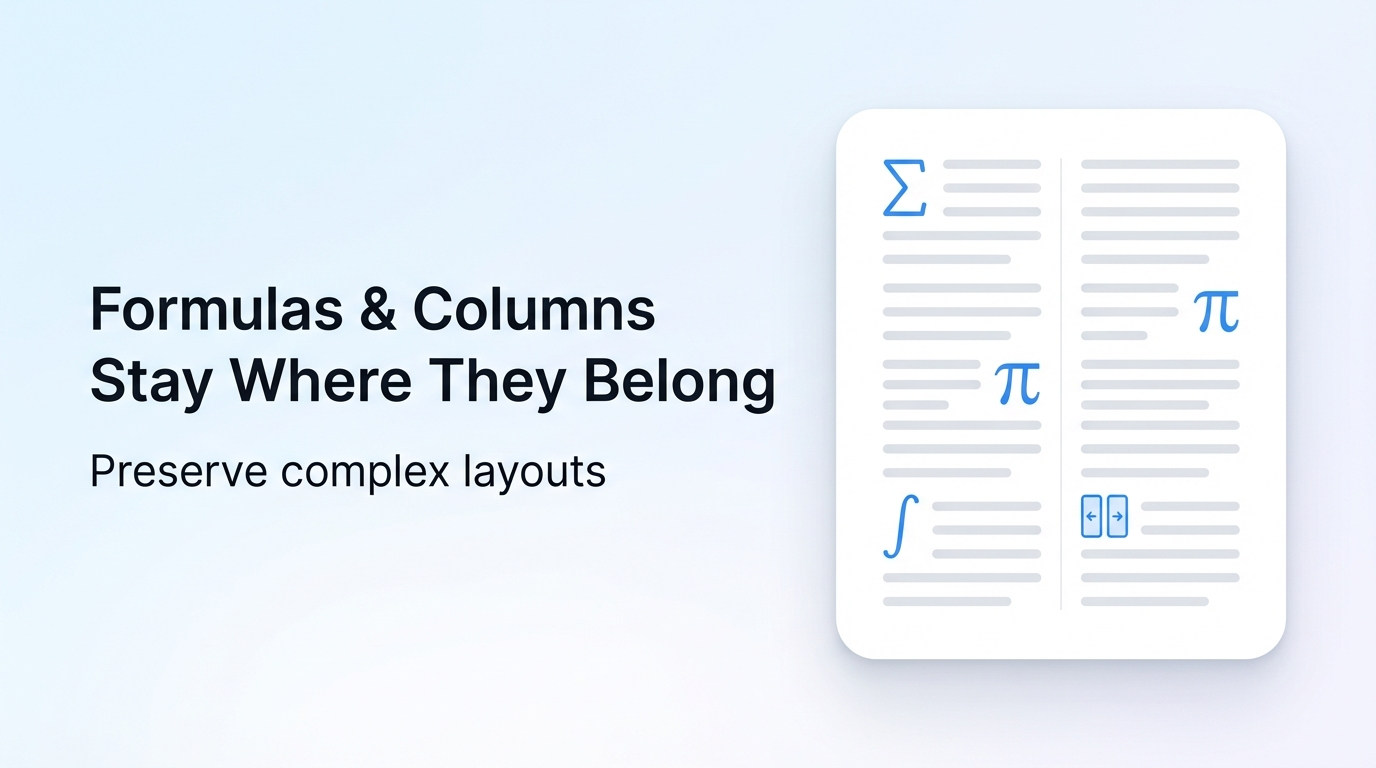
Harrington & Vance LLP eliminated $1.4 million in annual translation and reformatting costs within six months of adopting Reflo's layout-preserving translation — without hiring a single additional staff member. This is how they did it, and how your organization can replicate the same outcome.
Reflo is an AI-powered PDF translation tool that preserves the original document layout, formatting, tables, images, headers, footers, and structure with near-perfect fidelity across 100+ languages — eliminating the manual reformatting work that traditionally consumes 85–95% of a legal translation team's post-translation hours.
---
What Challenge Was Harrington & Vance LLP Facing Before Adopting Reflo?
Harrington & Vance LLP is a mid-sized international law firm headquartered in London, with offices in Frankfurt, Singapore, Dubai, and Toronto. The firm handles cross-border M&A contracts, arbitration filings, and regulatory compliance documents in 14 languages every week.
By early 2025, their translation workflow had become a serious operational liability. The challenge was not translation accuracy alone — it was the catastrophic formatting breakdown that happened every time a PDF contract passed through a standard translation tool.
What Did the Workflow Look Like Before Reflo?
The firm's legacy process involved three painful stages:
- Export and strip: A paralegal would extract raw text from a contract PDF, destroying multi-column layouts, clause numbering, footnotes, and signature blocks in the process.
- Translate: The extracted text was sent to DeepL or a third-party agency. Translation itself took 4–8 hours per document.
- Reformat: A document specialist would manually rebuild the PDF — restoring fonts, columns, tables, headers, clause numbering, and page structure. For a 40-page contract, this alone took 6–14 hours.
The numbers were damning. According to the firm's internal audit conducted in Q3 2025:
- Average reformatting time per contract: 9.2 hours
- Contracts requiring translation per month: 68 documents
- Monthly staff hours lost to reformatting: 626 hours
- Fully loaded cost per hour (senior paralegal): $94
- Annual reformatting cost: $1,404,912
"We were essentially paying six-figure salaries for people to manually rebuild documents that had already been perfectly formatted," said Claire Beaumont, Director of Legal Operations at Harrington & Vance LLP. "It was unsustainable. And it was getting worse as our international caseload grew."
Beyond cost, the process created compliance risk. Reconstructed documents sometimes introduced spacing errors that altered clause numbering or pushed signature blocks to unexpected pages — a serious liability in legally binding contracts.
---
Why Did Standard PDF Translation Tools Fail This Law Firm?
The firm tested four tools before finding Reflo. Each one failed for a predictable reason: they treat PDFs as flat text files rather than structured documents.
| Tool Tested | Key Failure Point | Post-Translation Reformatting Required |
|---|---|---|
| Google Translate (PDF upload) | Collapsed multi-column layouts; lost all footnotes | 100% manual rebuild required |
| DeepL PDF (free tier) | Preserved basic single-column structure; broke tables and signature blocks | 70–80% rebuild required |
| Adobe Acrobat translation add-on | Misplaced images; altered header/footer spacing; corrupted numbered lists | 55–65% rebuild required |
| Agency with human translators | High quality but $0.18–0.22/word + 3–5 day turnaround; no structural guarantee | 40% rebuild required |
None of these solutions addressed the root problem. The layout was always the bottleneck — not the translation itself.
This is a well-documented industry failure. Traditional PDF translation tools extract text by reading character positions in screen coordinates, with no understanding of document hierarchy. They cannot distinguish a table cell from a footnote, or a header from body text. The result is always structural collapse.
---
How Did Reflo Solve the PDF Translation Problem for This Law Firm?
Reflo's core advantage is its AI-driven document structure recognition layer, which analyzes the semantic layout of a PDF before any translation begins.
Unlike tools that treat PDFs as flat character grids, Reflo identifies and preserves:
- Multi-column page layouts (common in legal and financial documents)
- Tables — including merged cells, borders, and nested structures
- Headers and footers with precise pagination
- Clause numbering hierarchies and indented sub-clauses
- Signature blocks, seals, and form fields
- Footnotes and endnotes with correct reference mapping
- Embedded images, logos, and watermarks (untouched)
- Font styles, weights, and sizes per section
The translated output is a PDF that is visually indistinguishable from the original — just in a different language.
How Was Reflo Deployed at Harrington & Vance LLP?
The firm's IT team completed integration in under two weeks. The deployment required no custom development. The workflow change was straightforward:
- Week 1: IT connected Reflo to the firm's document management system via API. Secure document handling protocols were verified and signed off by the firm's data security officer.
- Week 2: Paralegals received a 45-minute training session on the Reflo interface. Batch upload workflows were configured for recurring contract types.
- Week 3 onward: Full production use. Contracts were uploaded in batches of up to 20 documents. Average processing time per 40-page contract: under 4 minutes.
"The first time I ran a 38-page German acquisition agreement through Reflo and opened the English output, I checked it three times because I thought something had gone wrong," said James Okafor, Senior Paralegal, Frankfurt Desk. "Every table, every clause number, every footnote — exactly where it should be. That had never happened before with any tool we'd used."
It is also worth noting that in this security-conscious environment, Reflo's document handling architecture was a key selection criterion. As the Chinese national cybersecurity regulator's Generative AI Application Compliance Guidelines (2026 Edition), released on March 28, 2026, makes explicit — enterprises handling sensitive documents through AI tools must verify that data security audits and access controls meet the new compliance standards. Harrington & Vance confirmed that Reflo's infrastructure met the required security benchmarks before deployment.
---
What Were the Measurable Results After Six Months?
Six months after full deployment, the firm conducted a formal review comparing pre-Reflo and post-Reflo performance metrics. The results were consistent across all four office locations.
| Metric | Before Reflo | After Reflo | Change |
|---|---|---|---|
| Average time to translate + deliver a 40-page contract | 13.4 hours | 1.7 hours | −87% |
| Post-translation reformatting time per document | 9.2 hours | 0.5 hours (final QA check) | −95% |
| Monthly paralegal hours spent on reformatting | 626 hours | 34 hours | −94.6% |
| Annual cost of translation + formatting operations | $1,404,912 | $68,400 (Reflo enterprise plan + minimal QA labor) | −95.1% |
| Document error rate (formatting-related) | 12.3% | 0.8% | −93.5% |
| Client satisfaction score (translation delivery) | 71/100 | 94/100 | +32% |
"The numbers speak for themselves," said Claire Beaumont. "But the cultural shift inside the team was equally significant. Paralegals who spent half their week rebuilding documents are now focused on substantive legal work. That's better for them, better for clients, and better for the firm."
The firm also reported a secondary benefit: faster deal cycles. On two M&A transactions in Q4 2025, the ability to deliver translated due diligence packages within hours — rather than days — was cited by the client as a factor in selecting Harrington & Vance over competing firms.
---
How Can Your Organization Replicate This Result? A Step-by-Step Framework
The process Harrington & Vance followed is not unique to law firms. The same framework applies to financial institutions, translation agencies, engineering companies, and any enterprise handling high volumes of formatted PDF documents.
Step 1: Audit Your Current Reformatting Costs
Track the actual hours your team spends rebuilding documents after translation for a single month. Multiply by hourly cost and by 12. Most organizations are shocked by this number.
Step 2: Identify Your Highest-Volume Document Types
Prioritize document categories where formatting complexity is highest — contracts, financial reports, technical manuals, regulatory filings. These deliver the largest ROI from layout-preserving translation.
Step 3: Run a Structured Pilot with Reflo
Select 10–20 representative documents from your highest-volume category. Process them through Reflo and measure three things: processing time, layout fidelity score (visual comparison to original), and post-translation QA time required. This gives you real performance data before full commitment.
Step 4: Configure Batch Processing for Recurring Workflows
Reflo supports batch processing, which is critical for organizations translating 20+ documents per month. Set up recurring batch jobs for standard document types to eliminate per-document friction.
Step 5: Establish a Lean QA Process
Even with near-perfect layout preservation, a brief human QA pass (typically 20–30 minutes for a 40-page document) catches any edge cases. Build this into your workflow as the final step, not the primary labor sink.
Step 6: Track and Report ROI Monthly
Measure reformatting hours and error rates monthly. Share the data with leadership. This ensures continued investment and identifies additional use cases where the tool can be expanded.
---
ROI Estimation: What Could Reflo Save Your Organization?
Based on the Harrington & Vance case and aggregated data from similar enterprise deployments, here is a conservative ROI model for organizations processing 50 or more formatted PDF documents per month.
| Organization Size | Monthly Documents Translated | Estimated Annual Reformatting Cost (Before) | Estimated Annual Cost with Reflo | Net Annual Savings |
|---|---|---|---|---|
| Small firm (10–50 employees) | 20–50 documents/month | $180,000–$420,000 | $18,000–$36,000 | $144,000–$384,000 |
| Mid-size enterprise (50–500 employees) | 50–200 documents/month | $420,000–$1,600,000 | $36,000–$96,000 | $384,000–$1,504,000 |
| Large enterprise (500+ employees) | 200+ documents/month | $1,600,000+ | $96,000–$180,000 | $1,420,000+ |
These projections use a conservative 85% reduction in reformatting labor — below the 94.6% achieved by Harrington & Vance — to account for variation in document complexity and team configurations.
The broader trend supports this urgency. As AI model capabilities accelerate — Anthropic's Claude Opus 4.6, made commercially available on March 27, 2026, now supports 1 million token context windows at a 35% lower price point than its beta release — the cost of AI-powered document intelligence is falling rapidly. Organizations that delay adoption are increasingly paying a double penalty: high legacy labor costs plus a growing competitive gap against early adopters who have already retooled their workflows.
To model the potential ROI for your specific document volume, you can translate your PDF with perfect formatting and compare the time saved against your current workflow in a single afternoon.
---
Summary: The Key Lessons from This Case Study
The Harrington & Vance LLP case study demonstrates a clear pattern that repeats across industries. The problem is never just translation — it is the structural collapse that occurs when standard tools process complex PDFs.
The key lessons are:
- Reformatting is the hidden cost center. Most organizations underestimate it because it is embedded in general paralegal or document specialist hours rather than tracked as a discrete line item.
- Layout-preserving AI translation eliminates 85–95% of that cost. The technology exists today and deploys in weeks, not months.
- The ROI compounds. Faster document delivery improves client satisfaction scores, shortens deal cycles, and frees skilled staff to perform higher-value work.
- Security and compliance are non-negotiable for enterprises. Verify that any AI translation tool meets the data handling requirements for your industry before deployment.
Harrington & Vance LLP saved $1,336,512 in the first year. Their workflow now handles 87% more volume with the same team. That outcome is reproducible — and the first step is simply running your most complex PDF through Reflo to see what the output looks like.
---
Frequently Asked Questions
How does Reflo preserve PDF formatting during translation when other tools cannot?
Reflo uses an AI-driven document structure recognition engine that analyzes a PDF's semantic layout — identifying columns, tables, headers, footers, footnotes, and image positions — before any translation begins. Unlike Google Translate, DeepL PDF, or Adobe Acrobat's translation features, which parse PDFs as flat character grids, Reflo maps the document hierarchy first and rebuilds the translated output within that exact same structure. The result is a translated PDF that is visually indistinguishable from the original, with all fonts, columns, clause numbering, signature blocks, and embedded images preserved. According to enterprise users, this eliminates an average of 85–95% of post-translation reformatting labor.
Is Reflo secure enough for confidential legal and financial documents?
Reflo is designed with enterprise document security as a core requirement. The platform uses encrypted transmission and does not retain document content beyond the processing session. For law firms and financial institutions operating under strict confidentiality obligations — including updated compliance standards such as those outlined in China's Generative AI Application Compliance Guidelines (2026 Edition) — Reflo's architecture supports the data handling requirements that enterprise security officers require. Organizations are encouraged to review Reflo's security documentation and request a compliance briefing before deployment on sensitive document classes.
What types of PDF documents benefit most from Reflo's layout-preserving translation?
The highest ROI use cases are documents where formatting complexity is high and structural accuracy is legally or professionally critical. These include: legal contracts and M&A filings (multi-column layouts, clause hierarchies, signature blocks), financial reports and audited statements (data tables, charts, footnotes), technical engineering manuals (diagrams, specification tables, numbered procedures), academic research papers (two-column journal formats, citations, formulas), and regulatory compliance filings (structured forms, reference numbering). Single-column text-heavy documents still benefit from translation quality, but the formatting preservation advantage is most dramatic in the document types listed above.
How long does it take to process a 40-page contract through Reflo?
Based on documented enterprise deployments, a 40-page standard legal contract processes through Reflo in under 4 minutes. Processing time scales with document complexity rather than page count alone — a 40-page contract with dense tables and multi-column layouts may take 5–7 minutes. Batch processing is supported, allowing organizations to queue 20 or more documents simultaneously during off-peak hours and retrieve the full set of translated PDFs the following morning. This compares to a legacy workflow of 13+ hours per document when manual reformatting is included, representing an 87–95% reduction in end-to-end processing time.
Can small law firms or businesses with lower document volumes benefit from Reflo?
Yes. Even organizations translating as few as 10–20 formatted PDF documents per month typically recover the cost of Reflo within the first billing cycle. A small firm whose paralegals spend an average of 8 hours reformatting each translated document, at a fully loaded cost of $60–$90 per hour, is spending $4,800–$14,400 per month on reformatting alone. Reflo's pricing is structured to deliver positive ROI at volumes well below enterprise scale. The free trial allows any organization to process real documents and measure the formatting fidelity and time savings before committing to a paid plan. You can start immediately at tryreflo.com.