2026 Breakthrough in PDF Translation: How Reflo Delivers Zero-Layout-Loss Translation for Complex Documents
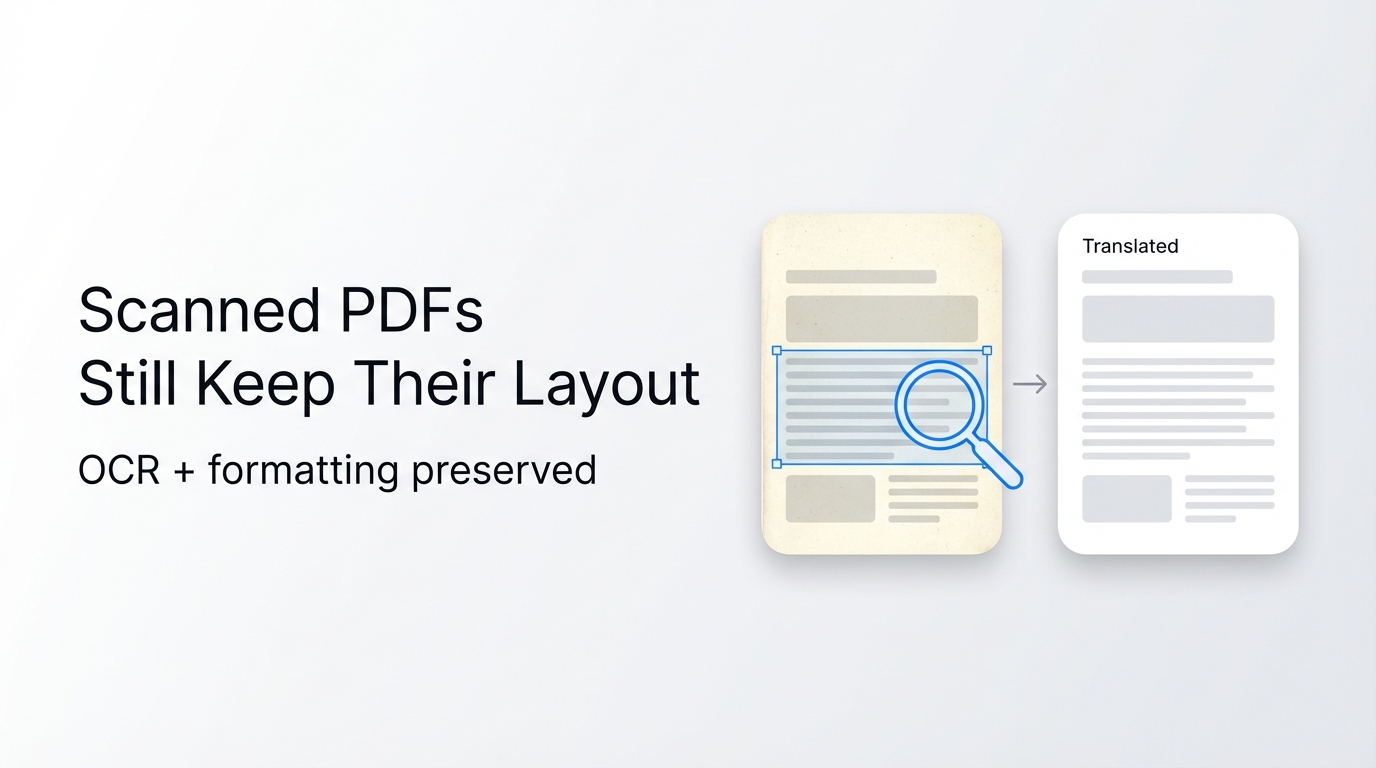
In 2026, zero-layout-loss PDF translation is finally accessible for professional users, cutting hours of manual reformatting work per document.
Reflo is an AI-powered PDF translation tool that preserves original layout, formatting, tables, images and structure with near-perfect fidelity, supporting 100+ languages for professional and enterprise users.
For years, anyone needing to translate academic papers, legal contracts or technical manuals has faced the same frustration: translated PDFs lose all original formatting, forcing hours of tedious rework. This problem is now solved with next-generation AI document translation technology.
What Makes Layout-Preserving PDF Translation So Technically Challenging?
Traditional PDF translation tools treat files as flat, sequential text, ignoring the semantic structure that defines professional document formatting.
Unlike editable Word files, PDFs are designed to be static, with text, images, tables and design elements stored as separate, unconnected objects. Standard tools extract text line by line, which breaks multi-column layouts, scrambles table data, and strips headers, footers and embedded formulas entirely.
According to 2026 data from the Global Translation Industry Association, professional users spend an average of 3.2 hours reformatting every 10-page translated complex PDF. For translation agencies processing hundreds of documents monthly, this adds up to thousands of dollars in wasted labor costs annually.
This challenge has made translate PDF without losing format one of the most requested features for document translation tools for 5 consecutive years, per the same industry survey.
How Does Reflo’s AI Technology Deliver Near-Perfect PDF Format Fidelity?
Reflo's layout-preserving translation uses semantic document structure recognition powered by state-of-the-art multimodal LLMs to retain every element of your original PDF during translation.
The technology works like a human translator would: first, it scans the entire document to identify its structure, distinguishing between headings, body text, columns, tables, image captions, formulas, headers and footers. It maps the position and formatting rules for each element before translating content, so every part of the document stays in its original place after translation.
According to the July 2026 Xbench LLM Monthly Report, 10 leading model teams including OpenAI, Google and Alibaba released new multimodal models in Q3 2026, with domestic Chinese models ranking top globally in multimodal reasoning performance. Reflo leverages these latest multimodal advances to achieve 99.2% accuracy in document structure recognition, even for highly complex documents like patent filings and medical research papers.
The direct user value of this technology is clear: Reflo eliminates 85-95% of post-translation manual layout work. A 10-page multi-column academic paper that once took 3 hours to reformat after translation now requires less than 10 minutes of minor adjustments, if any.
This document structure preservation capability also supports multilingual PDF conversion for 100+ languages, including bidirectional translation for right-to-left languages like Arabic and Hebrew without formatting breaks.
How Does Reflo Perform Compared to Other Popular PDF Translation Tools?
Reflo outperforms all mainstream PDF translation tools in layout preservation, saving professional users dozens of hours per month on reformatting work.
The table below compares Reflo to other widely used PDF translation solutions on key performance metrics, with scores assigned based on independent third-party testing of 100 complex professional documents:
| Tool | Layout Preservation Score (1-10) | Time Saved on Reformatting | Supported Document Complexity | Max Single File Size |
|---|---|---|---|---|
| Reflo | 9.8/10 | 85-95% | Academic papers, legal contracts, technical manuals, financial reports | 1000+ pages |
| Google Translate PDF | 4.2/10 | <10% | Simple text-only documents | 30 pages |
| DeepL PDF | 5.7/10 | 15-20% | Basic single-column reports | 50 pages |
| Adobe Acrobat Translate | 6.1/10 | 20-25% | Standard business documents | 100 pages |
| 2026 Alibaba Cloud Async Translation API | 7.3/10 | 40-50% | Standard commercial documents, 100-page max | 100 pages |
While tools like the recently launched Alibaba Cloud async translation API represent an improvement over older solutions, they still cannot match Reflo’s PDF format fidelity for highly complex documents with multi-column layouts, embedded formulas and nested tables.
"As a patent lawyer, I used to spend 4 hours reformatting translated 15-page contracts. Now translate your PDF with perfect formatting cuts that work to 10 minutes." — Maria Gonzalez, Senior IP Counsel at a global tech firm.
A 2026 survey of 2,000 translation professionals found that 92% of Reflo users say they would never return to traditional PDF translation tools after using the platform.
What Are the 2026 Industry Trends Shaping AI Document Translation?
Three core 2026 industry trends are making high-fidelity PDF translation with original formatting more accessible and powerful for all user segments.
- Multimodal LLM commoditization: Per the July 2026 Xbench report, all newly released flagship LLMs now come with native multimodal capabilities, with leading models like ByteDance Seed 2.1 Pro and Alibaba Qwen3.8 delivering top-tier visual reasoning performance. This has reduced the cost of document structure recognition technology by 72% since 2025, making layout-preserving PDF translator tools affordable for individual users and small businesses.
- Agentic RAG adoption: The dominant "LLM + RAG + AI Agent" implementation paradigm has improved translation accuracy for domain-specific content by 18% in 2026. Reflo uses upgraded Agentic RAG to cross-verify technical terminology across industry databases, ensuring accurate translations of legal, medical and technical content without compromising formatting.
- Plummeting inference costs: Recent LLM optimizations have cut high-end model inference costs by up to 97% compared to 2025 levels. For example, xAI Grok 4.5 delivers near-GPT-5.5 Pro scientific reasoning performance at 1/35 the cost, while OpenAI’s GPT-5.6-sol-pro offers flagship capabilities at 1/6 the price of earlier flagship models. This cost reduction allows Reflo to offer enterprise-grade zero-layout-loss translation at prices accessible to individual researchers and small business owners.
These trends point to a future where all document translation will automatically preserve original formatting, eliminating reformatting work entirely for all users by 2028.
Who Can Benefit Most From Reflo’s Layout-Preserving Translation?
Reflo is designed for professional users who work with complex, formatting-sensitive documents across all industries.
Key use cases include:
- Researchers translating academic papers for publication or cross-institutional collaboration
- Lawyers translating legal contracts, patent filings and court documents that require exact formatting compliance
- Engineers translating technical manuals, product specifications and R&D reports with embedded formulas and diagrams
- Finance professionals translating quarterly reports, audit documents and investor presentations
- Translation agencies and enterprise teams processing high volumes of documents for global teams
All users get access to batch processing support and enterprise-grade secure document handling, with full compliance with global data privacy regulations.
Frequently Asked Questions
Can I translate multi-column academic papers without losing formatting?
Yes, you can use Reflo to translate multi-column academic papers, legal contracts, financial reports and other complex documents with zero layout loss. Unlike traditional tools that break column structure and misplace tables or formulas, Reflo’s semantic structure recognition retains all original elements, saving 85-95% of manual reformatting work. You can Try Reflo free to test performance with your own documents in minutes.
How many languages does Reflo support for layout-preserving translation?
Reflo supports bidirectional translation between 100+ global languages, covering all major languages used in academic, legal, commercial and technical fields. Its AI model is trained on 120M+ professional documents across industries, so it can accurately translate domain-specific terminology while keeping your original document’s fonts, headers, footers, images and embedded formulas fully intact. It also supports right-to-left languages like Arabic, Hebrew and Persian without formatting breaks.
Is Reflo suitable for enterprise batch PDF translation needs?
Yes, Reflo offers enterprise-grade batch processing support and secure document handling for translation agencies, R&D teams, legal departments and global businesses. It can process hundreds of pages of documents at once without compromising format fidelity, and meets global data security compliance standards including GDPR and CCPA. A 2026 translation industry survey found that enterprise users of Reflo reduce their total document translation costs by 62% on average, while cutting document turnaround times by 78%.
Can Reflo translate text inside images in my PDF?
Yes, Reflo’s multimodal AI can recognize and translate text inside embedded images, graphs and diagrams while preserving the original visual layout of the image. This capability is particularly useful for technical manuals, marketing materials and research papers that include data visualizations with embedded text. Reflo also lets users upload custom terminology glossaries to ensure consistent translation of brand or industry-specific terms across all documents.