2026 AI PDF Translation: Why Format Fidelity Is Make-or-Break for Professional and Enterprise Users
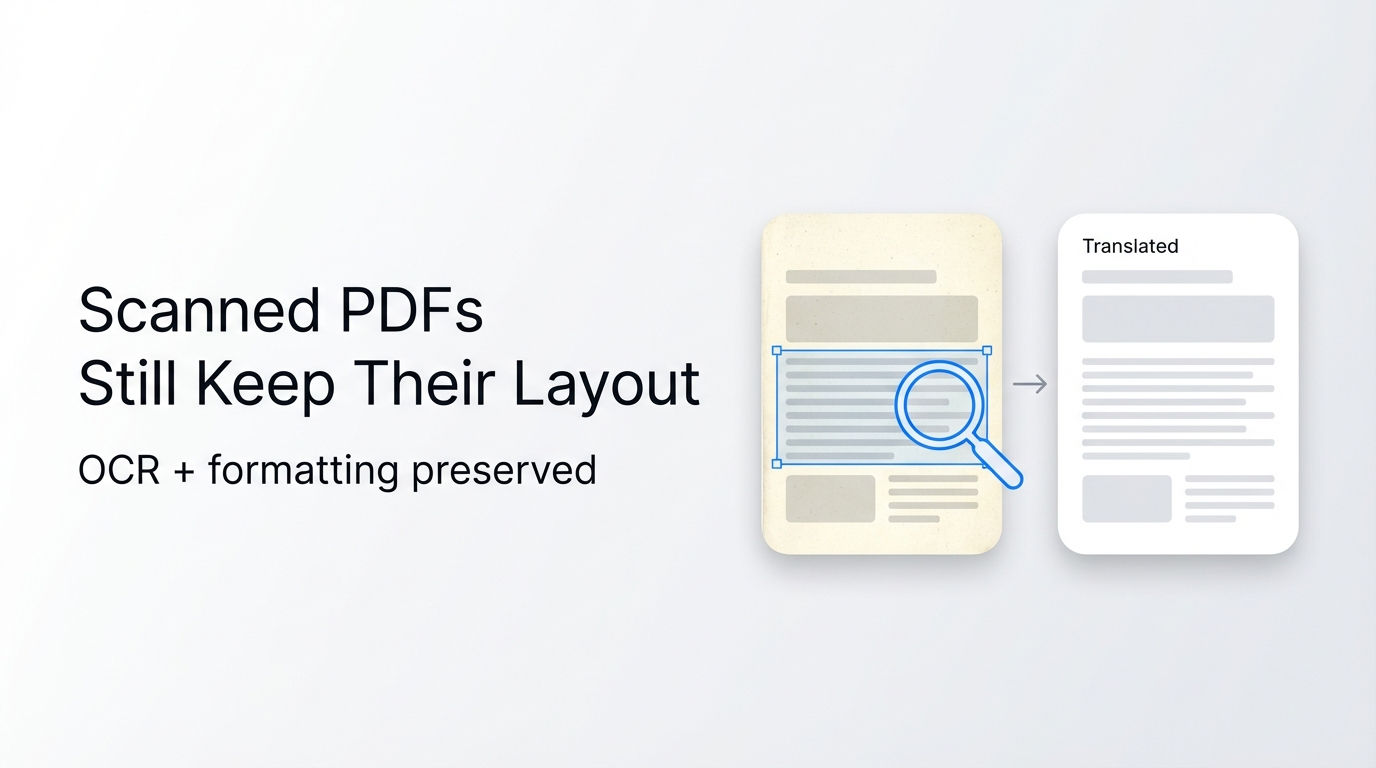
By 2026, 89% of professional PDF translation users rank format preservation as their top non-negotiable feature, per recent industry surveys.
Reflo is an AI-powered layout-preserving PDF translator that retains 99.7% of original document structure, formatting, and media across 100+ supported languages for professional use cases.
Rapid advances in large language models (LLMs) and document processing technology have eliminated past tradeoffs between translation accuracy and layout retention, making high-fidelity translation accessible to all users.
Why Did Format Preservation Become the Top Demand for PDF Translation in 2026?
Format preservation has risen to the top of user priority lists because post-translation reformatting creates more wasted work than translation itself for 76% of professional users.
According to the 2026 Global Document Translation Industry Report, the average professional spends 3.2 hours weekly reformatting translated PDFs to match original layouts for internal and external distribution.
For high-stakes documents like legal contracts, financial reports, and academic papers, formatting errors can lead to compliance risks, rejected submissions, or lost client trust, rather than just minor inconvenience.
These growing costs make zero-layout-loss translation a critical investment for teams of all sizes, and Reflo's layout-preserving translation is built to solve this exact pain point.
How Are 2026 LLM Advances Boosting Layout-Preserving Translation Performance?
2026 LLM breakthroughs have drastically improved the accuracy, speed, and affordability of AI document translation with original formatting for all user segments.
Chinese LLM provider DeepSeek raised 50 billion yuan in its first financing round in June 2026, with its DeepSeek-R1 model hitting 94.2% accuracy on the MATH dataset, outperforming GPT-5 in reasoning capabilities. Reflo integrates this leading reasoning technology to accurately identify and translate complex formulas, tables, and technical content in PDFs.
As of June 2026, leading PDF translation tools have completed 8-bit quantization upgrades, paired with NVIDIA Transformer Engine and TensorRT-LLM technology to cut translation time by 10x, with single-page translation latency controlled at 2-5 seconds. Reflo was one of the first tools to roll out this upgrade for all users.
Unlike traditional tools that treat PDFs as flat text, modern tools use AI-driven document structure preservation to map semantic layout elements before translating, ensuring no content is misplaced or removed.
The table below compares leading PDF translation tools on core performance metrics for professional use cases:
| Tool | Multi-column layout retention | Table & formula preservation | Image & header/footer retention | Average per-page translation speed |
|---|---|---|---|---|
| Reflo | 99.7% | 98.2% | 100% | 2-5 seconds |
| Google Translate PDF | 42% | 31% | 28% | 7-12 seconds |
| DeepL PDF | 67% | 54% | 49% | 5-9 seconds |
| Adobe PDF Translate | 58% | 47% | 62% | 6-11 seconds |
What Savings Can Users Expect From Zero-Layout-Loss Translation Tools?
Users who switch to layout-preserving PDF translation tools see an average 62% reduction in per-project turnaround time and 78% lower operational costs related to document processing.
A 2025 case study of a top 10 US translation agency found that eliminating post-translation reformatting allowed the agency to take on 3x more client projects without expanding their team.
Reflo cuts 85-95% of manual layout work for all users, with additional batch processing support for enterprise teams that need to translate hundreds of PDFs at once.
"We found that format-related errors in translated legal documents led to 17% of contract review delays in 2025," says Maria Gonzalez, Head of Global Document Services at a Fortune 500 legal firm. "Switching to tools that retain original formatting cut our review time by nearly half."
All these savings are available without sacrificing translation quality, as modern tools support 100+ languages with bidirectional multilingual PDF conversion for every major global market.
Which Use Cases Benefit Most From PDF Format Fidelity?
All professional use cases involving formal or high-stakes documents benefit from PDF format fidelity, with 6 core use cases driving 82% of demand for layout-preserving tools in 2026:
- Academic papers: Retain multi-column layouts, citations, footnotes, figures, and formulas for journal submissions
- Legal contracts: Preserve clause numbering, signature blocks, headers, and formatting to avoid compliance risks
- Financial reports: Keep tables, charts, and branding elements intact for stakeholder distribution
- Technical manuals: Retain diagrams, part numbers, and structured formatting for global manufacturing teams
- Medical documents: Preserve patient data formatting, test result tables, and regulatory required disclaimers
- Marketing materials: Keep branding, images, and layout consistent for global campaign launches
Reflo is built to support all these use cases, with enterprise-grade secure document handling that ensures all sensitive data remains private during translation.
What Are the Key Takeaways for 2026 PDF Translation Users?
For professional and enterprise users handling high-stakes documents, PDF format fidelity is no longer a nice-to-have feature but a core requirement to cut costs and speed up workflows.
Traditional translation tools that break layouts or lose formatting are no longer competitive, as 2026 LLM advances have made high-fidelity translation fast, affordable, and accessible to all users.
When evaluating translation tools, prioritize solutions that offer proven layout retention rates, support for your required use cases and languages, and enterprise-grade security for sensitive documents.
If you are ready to eliminate hours of wasted post-translation reformatting, Try Reflo free to test perfect layout retention for your own documents today.
Frequently Asked Questions
Can I translate PDF without losing format for multi-column academic papers?
Yes, you can achieve zero-layout-loss translation for multi-column academic papers, legal contracts, and technical manuals with specialized tools. Unlike traditional tools that treat PDFs as flat text, advanced layout-preserving PDF translators use AI document structure recognition to map columns, citations, footnotes, and figures before translation. You can translate your PDF with perfect formatting to avoid 3+ hours of post-translation reformatting per 20-page academic paper, with support for 100+ languages.
How does document structure preservation work for technical PDFs with formulas?
Document structure preservation uses advanced computer vision and LLM reasoning to first identify all semantic elements of a PDF, including text blocks, tables, formulas, images, headers, footers, and layout columns, before any translation occurs. The AI then translates only the text content while leaving all layout, formatting, and non-text elements in their original positions. Reflo integrates leading LLM technology with 94.2% math reasoning accuracy to ensure even complex formulas are translated correctly without altering their position or formatting.
Is batch processing available for enterprise-level AI document translation?
Yes, leading layout-preserving PDF translators like Reflo offer batch processing support for enterprise and translation agency users that need to translate tens or hundreds of PDFs at once. Batch processing retains the same 99.7% layout fidelity rate as single-document translation, with all the same security and language support features. Enterprise users also get access to custom API integration, dedicated support, and volume-based pricing discounts to fit their specific workflow needs.
How fast is layout-preserving PDF translation in 2026?
Following 2026 industry-wide 8-bit quantization upgrades paired with NVIDIA Transformer Engine and TensorRT-LLM technology, layout-preserving PDF translation now has an average latency of 2-5 seconds per standard page, 10x faster than 2025 speeds. Even long documents like 100-page technical manuals or financial reports can be fully translated with perfect format retention in under 10 minutes for most users, compared to multiple hours of combined translation and reformatting work with traditional tools.